
What is the easiest way to hit your protein while travelling?
Pick three protein anchors for the day and build every meal around one of them. Eggs, yoghurt, chicken, tuna and a shake cover almost every airport, hotel and family kitchen you will walk into.
A travel protein plan is a short list of foods you can find anywhere, decided before you leave. You do not need a spreadsheet. You need a default for each meal so you are not choosing while hungry at a gate.
Individuals who engage in regular resistance training may benefit from approximately 1.6 to 2.2 g of protein per kg of body weight per day, depending on their training goals and individual requirements. Aim to distribute your daily protein intake across 3 to 5 meals, with approximately 0.25 to 0.4 g of protein per kg of body weight per meal, adjusting portions according to your individual needs. If you want the full breakdown, read how much protein athletes need. If you want your own number, work out your macros before you pack.
How do you get protein at the airport?
Pack one protein item before you leave the house, then buy a second one airside. The 5am flight is where most travel days go wrong, because breakfast becomes a coffee and a pastry and lunch arrives at 2pm.
Picture a 34-year-old man, 178 cm, 82 kg, training four days a week and cutting. His estimated starting point is 1,788 kcal and 179 g of protein, with 134 g carbs and 60 g fat. It is an estimate, not a prescription. He leaves for Dubai airport at 5am, grabs a croissant and a flat white, and lands hungry with 20 g of protein to his name.
The fix takes two minutes the night before. Boil four eggs, or portion a scoop of whey into a zip bag. At the airport, add a Greek yoghurt pot or a grilled chicken wrap. Other convenient options include individually packaged protein bars, ready-to-drink protein shakes, and sealed high-protein yoghurt products. Powder usually goes through security in a clear bag, but check your airline’s rules before you fly.
Boiled eggs need to stay cold. If you cannot keep them cool, choose a shelf-stable option such as a protein bar or shake instead.
If the in-flight meal is not ideal, prioritise the available protein source, complement it with suitable carbohydrates and vegetables where possible, and adjust your next meal according to your hunger and nutritional needs.
How do you eat high protein at a hotel breakfast buffet?
Walk the whole buffet first, then build your plate protein-first. Hotel breakfasts in Dubai and Abu Dhabi usually have more protein than people use: omelette stations, boiled eggs, foul, labneh, yoghurt, smoked salmon, grilled chicken sausages.
Not every buffet food gives the same amount. Eggs and Greek yoghurt are the most reliable protein options: 2 boiled eggs give about 12 to 13 g, and 170 g of Greek yoghurt gives about 15 to 18 g. Foul and labneh contribute too, but their protein varies with serving size and preparation, so treat them as a supporting protein. Take a note of your portion sizes so you know roughly how much you are eating.
Take ten days of work travel. You eat the same buffet every morning, and by day four it is pastries and fruit. Use this order instead:
- Egg station first: an omelette or three boiled eggs, about 18 to 19 g.
- Add a second protein: Greek yoghurt or smoked salmon, with foul or labneh as extras.
- Add carbs you like: bread, oats or fruit.
- Pocket a yoghurt or two boiled eggs for the 3pm meeting gap, and keep them cool.
That plate gives you a solid protein hit without any effort. For lighter morning options, see these high protein breakfasts under 300 calories.
What do you do when a relative’s kitchen or a brunch table decides the menu?
Eat what is served and add protein where you can. Refusing your aunt’s food in Abu Dhabi costs more than it saves, and rigid rules fall apart at a family table anyway.
Say you arrive at 9pm and the tray is rice, lamb, salad and bread. Take the meat first and take a proper portion of it. Fill the rest of the plate with whatever you like. Ask for yoghurt on the side, because it adds protein and costs nothing.
A Friday brunch works the same way. When the table orders for everyone, claim the eggs, grilled meats or fish before the pastries circle. Then fix the gaps at the next meal instead of punishing yourself.
| Situation | Default | Easy swap |
|---|---|---|
| 5am flight | Boiled eggs from your bag, kept cool | Greek yoghurt and a chicken wrap at the gate |
| Hotel buffet | Omelette plus Greek yoghurt | Smoked salmon, foul or labneh as extras |
| Family dinner | Meat first, then sides | Yoghurt or labneh on the side |
| Late arrival | Shake in your room | Tuna with a small portion of nuts for additional healthy fats, or a ready-to-drink protein shake |
How much protein is in common travel foods?
Protein quantities for common travel foods are approximate and vary by brand and preparation. Use them to sanity check a plate, not to count to the gram.
| Food | Approximate protein |
|---|---|
| 2 boiled eggs | 12 to 13 g |
| 100 g grilled chicken breast | 30 to 31 g |
| 170 g Greek yoghurt | 15 to 18 g |
| 1 can of tuna (drained, about 100 g) | 23 to 26 g |
| 1 scoop whey protein | 20 to 25 g |
Food safety matters when you travel. Keep perishable foods such as boiled eggs, yoghurt and chicken at appropriate temperatures to minimise the risk of bacterial growth.
How does Fuel-Up fit around travel?
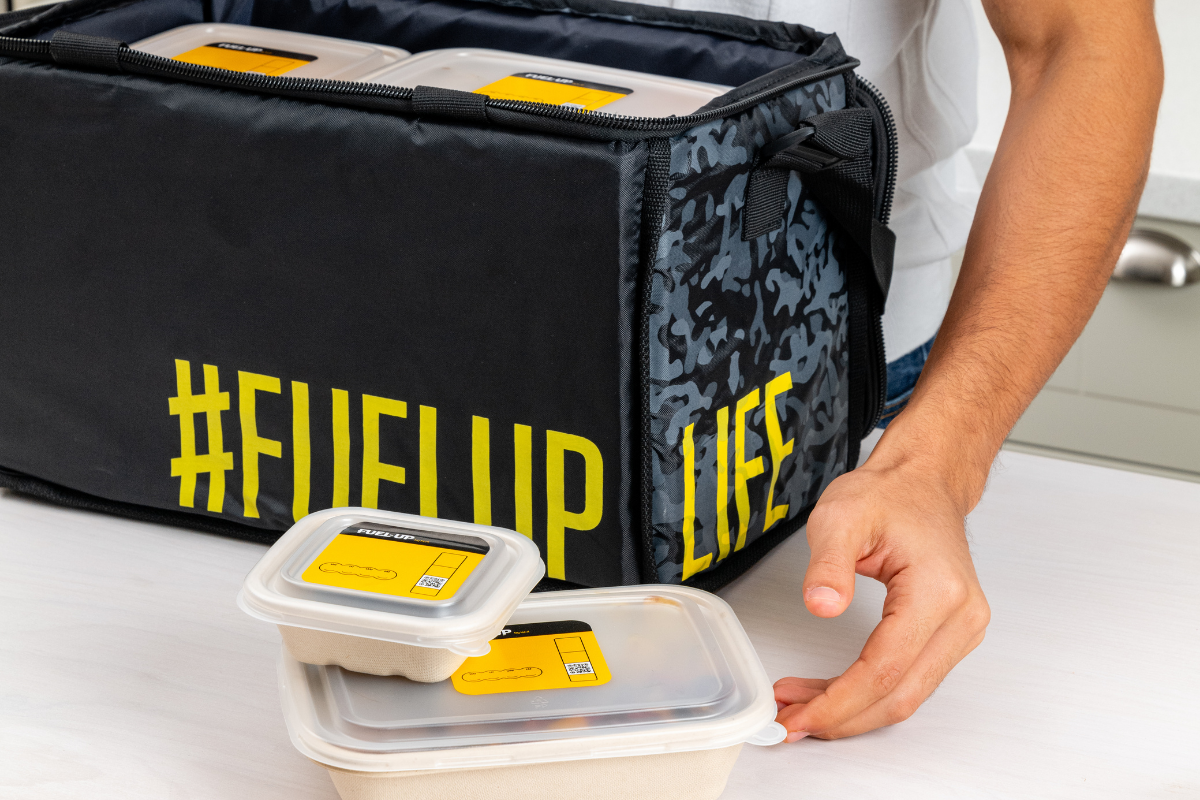
Fuel-Up is a customisable, macro-precise meal plan system in the UAE, and it is built for schedules that change. You can pause or reschedule up to 30 days at no charge, so a ten-day trip does not waste a week of meals. Swap meals anytime when plans shift.
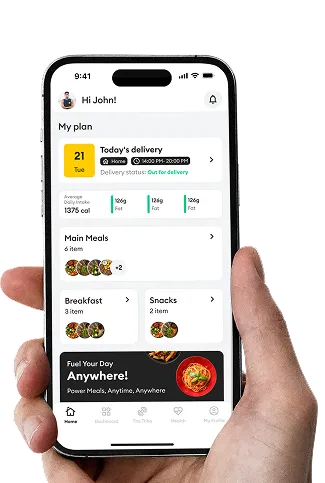
The plan builder estimates your calorie requirements based on your individual characteristics, activity level, and goals. Your macronutrient distribution is then tailored to support your nutritional needs and preferences. Treat that as a starting point and adjust from there. With 78,620+ unique meal combinations and 10 to 12 new menu items every month, the days you are home do not need to be boring.
Travel days need a plan too, and the tactics above cover them. For a broader system, read how to meal plan and hit your goals. You’re in control. We just deliver the food.
Sort your numbers before you fly: Build Your Plan.
Written by Yasmin Nedal, Fuel-Up nutritionist.